Subscribe to our newsletter
Thanks you for subscription!
Oops! Something went wrong while submitting the form.


In an era where data breaches and privacy concerns are on the rise, securing your AI projects, especially those involving large language models (LLMs), has never been more crucial. LLMs, with their extensive capabilities, can process, generate, and sometimes inadvertently expose sensitive information if not properly managed. Here, we'll explore best practices for data protection to ensure your AI applications remain both innovative and secure.
Personal Identifiable Information (PII) is any data that could potentially identify a specific individual. When working with LLMs, it's vital to implement mechanisms that can detect and remove PII from your datasets. This not only protects user privacy but also complies with global data protection regulations such as GDPR and CCPA. Techniques such as regex matching, dictionary-based checks, and machine learning models can be employed to identify and redact PII effectively.
Check out Microsoft’s presidio open source library to implement this yourself!

Content filtering is essential to prevent LLMs from generating or processing unwanted material. Identifying and filtering out forbidden terms help in maintaining the integrity and appropriateness of the content produced by your models. Implementing a dynamic list of forbidden terms that can be updated as per changing norms and regulations ensures your AI system remains resilient against generating harmful content.
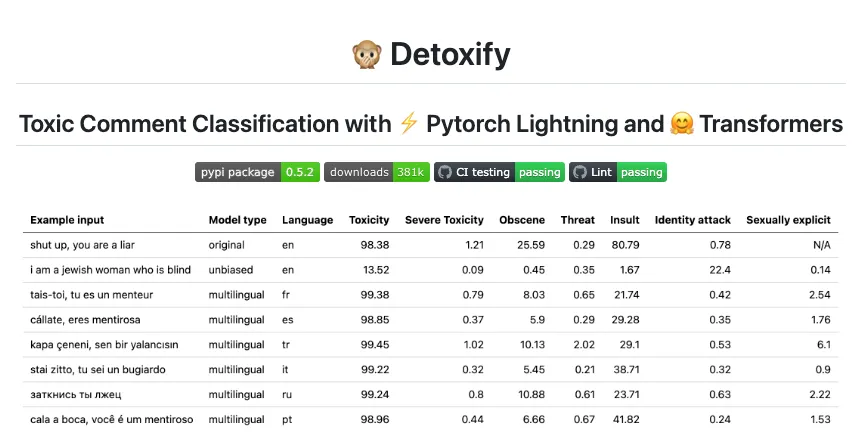
Toxicity in AI-generated content can severely tarnish an organization's reputation and user trust. Deploying toxicity detection algorithms to monitor and prevent the generation of offensive or harmful content is crucial. Training your LLMs with datasets cleaned of toxic material and setting strict content generation guidelines are effective strategies to mitigate this risk.
Check out Unitary’s detoxify open source library
Access control is a fundamental aspect of data protection. Carefully managing permissions ensures that only authorized personnel have access to sensitive data and AI models. Implementing role-based access control (RBAC) and regularly auditing access logs can help prevent unauthorized data access and potential breaches.
Most vector databases allow differentiated access to data based on their authentication status. TitanML also allows this in their pre-configured takeoff RAG engine for secure RAG applications.
While cloud-based solutions offer convenience and scalability, they also introduce third-party risks. Self-hosting your AI infrastructure within your own environment gives you complete control over your data and the security measures in place.
Titan Takeoff is designed to make this process effortless, offering a self-hosted inference server that is both powerful and easy to deploy. By deploying your LLMs with Titan Takeoff, you minimize the risk associated with third-party providers while ensuring your AI projects run scalably and securely.
Securing your AI projects requires a comprehensive approach that covers data privacy, content integrity, access control, and infrastructure security. By implementing these best practices, you can safeguard your data and AI applications against potential threats, ensuring they remain both effective and secure. Titan Takeoff plays a crucial role in this ecosystem, providing an easy-to-use, secure framework for self-hosting your LLMs in your own enviornment, enhancing your project's overall security posture.
Reach out to [email protected] if you would like to learn more and find out if the Titan Takeoff Inference Server is right for your Generative AI application.


Teams use Doubleword to run low-cost, large-scale inference pipelines for async jobs.
Free credits available to get started.
